It's 5:17 a.m. in Manchester.
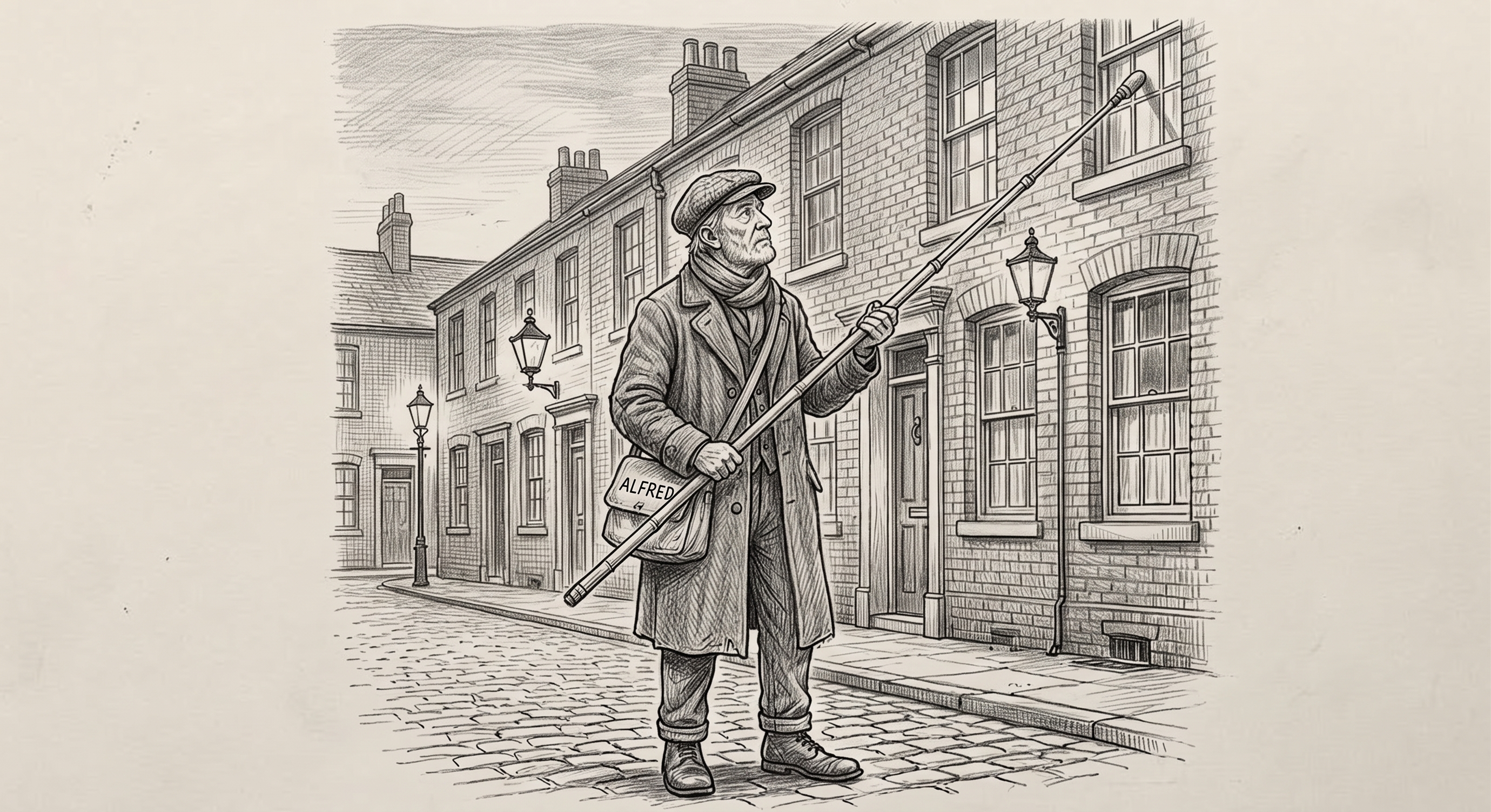
A man is dragging a wooden pole through the streets.
His name is Alfred. He's a "knocker-upper" — a human alarm clock. For a small fee, he taps on your window at the exact time you need to wake up.
Alfred is good at his job. Reliable. Consistent. He's built his whole life around it.
Then one morning he comes home and finds ⏰ a cheap mechanical alarm clock sitting on his kitchen table. His wife bought it. Within a year, half his customers don't need him anymore. Within ten, the job doesn't exist. The whole profession is scrubbed from history.
Right now, someone, somewhere, is quietly placing your alarm clock on your kitchen table.
Then Henry Ford visited a slaughterhouse.
And the rest of us inherited his idea.
Ford saw a disassembly line and thought: what if we did this in reverse?
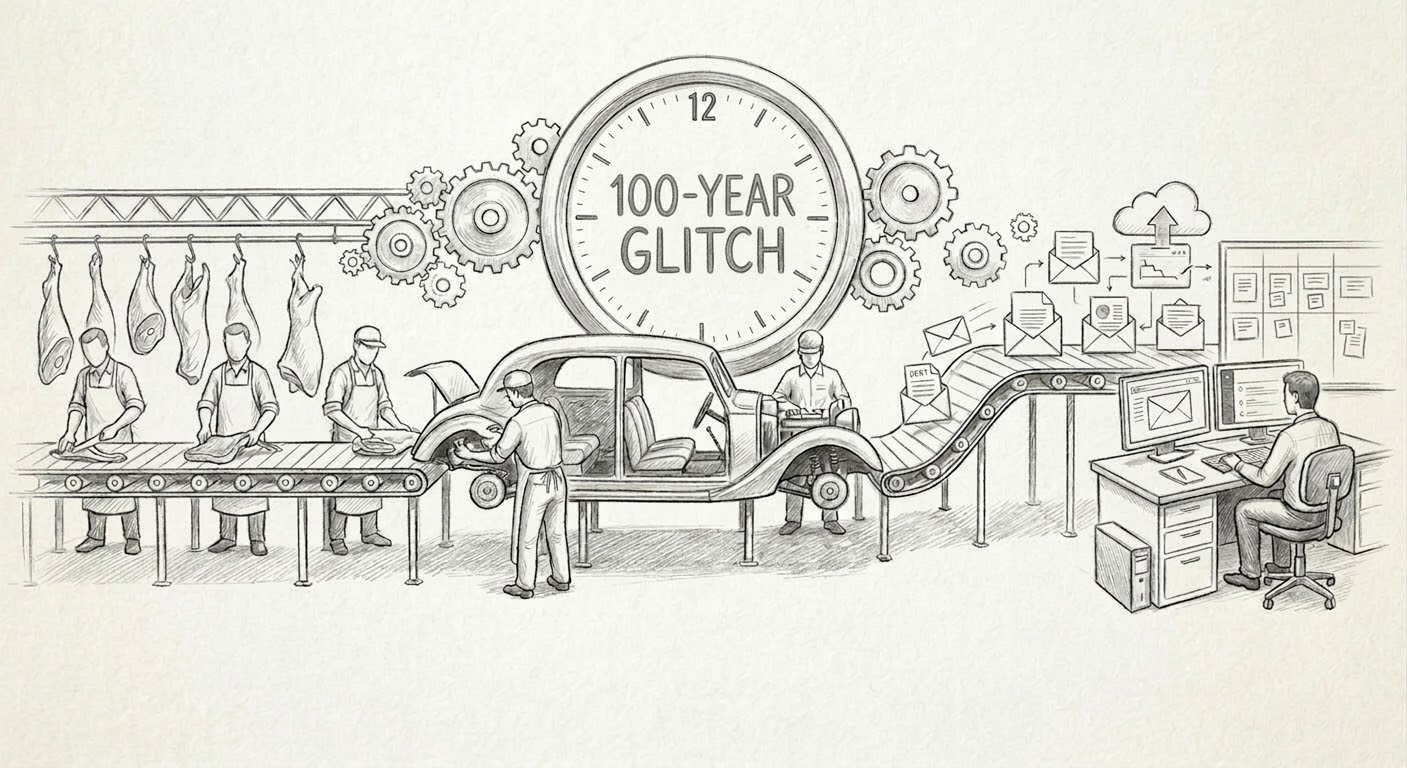
Before Ford, building a Model T took 12.5 hours of skilled craftsmanship. After Ford, it took 90 minutes of a human doing the same bolt, over and over, eight hours a day. Precise. Consistent. Unthinking.
Production exploded. Wages doubled. But something else happened nobody talks about: we stopped hiring humans. We started hiring humans to act like machines.
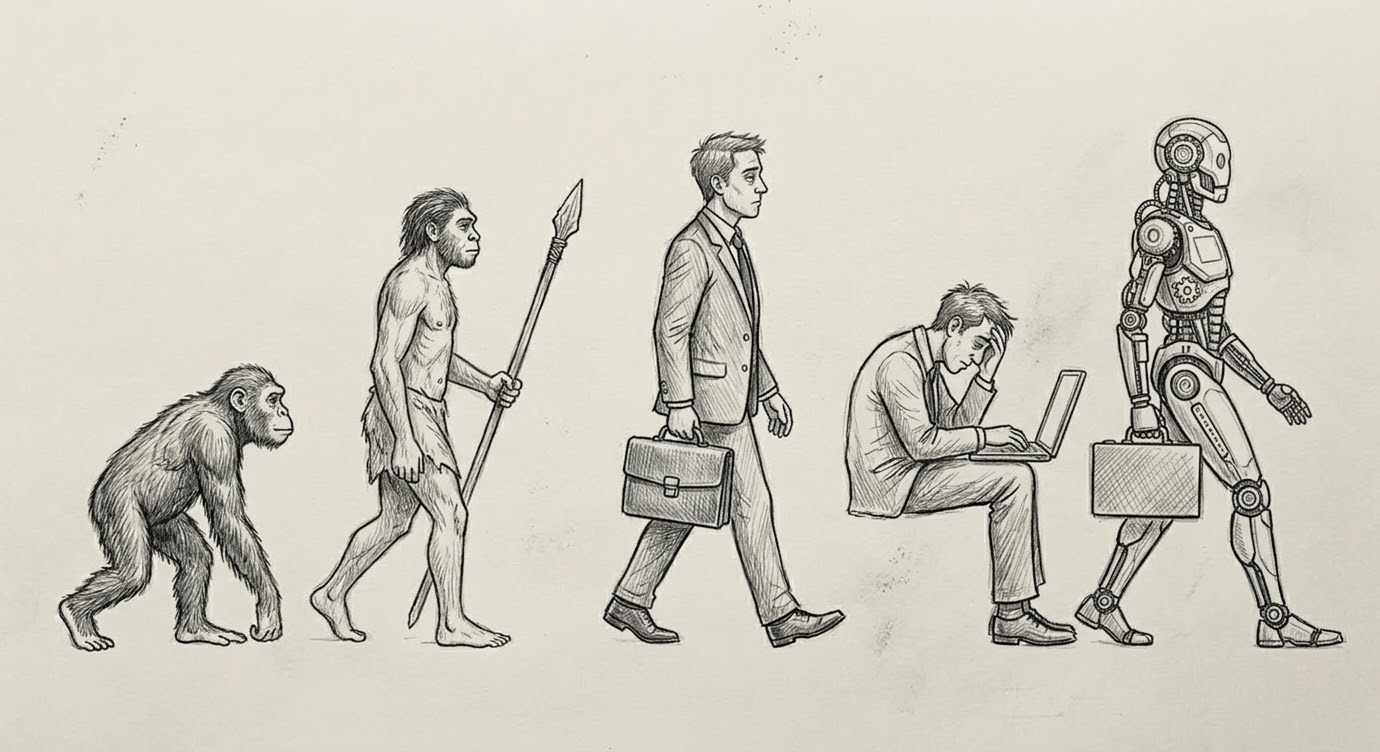
When the factories finally got real robots, the assembly line didn't disappear. It just moved — into your inbox. Into your Slack. Into cubicle 34D. The foreman became a KPI dashboard. The conveyor belt became Jira. The bolt became the email you have to send before 5pm.
You didn't sign up for an assembly line. But you've been standing on one your whole career.
You know the feeling.
You just don't have a name for it.
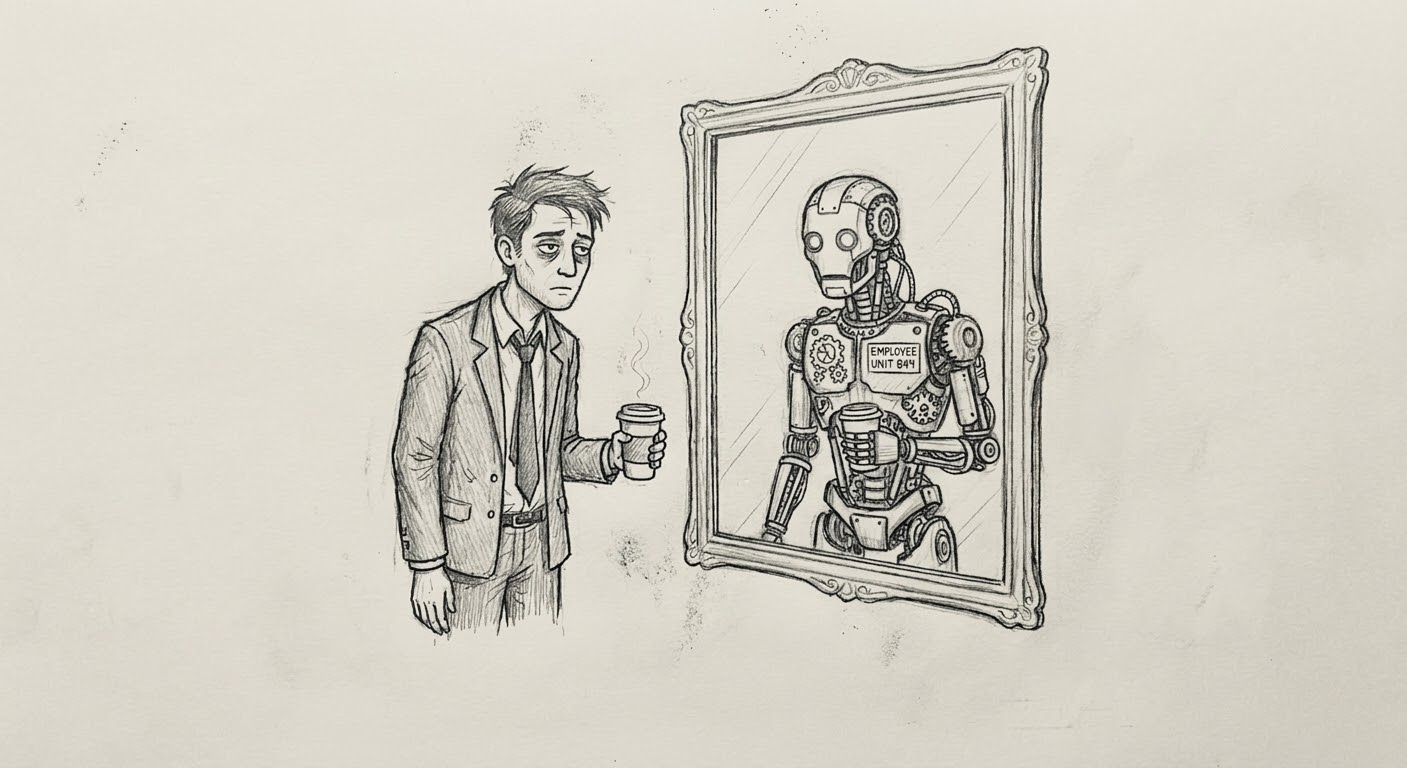
The fatigue that isn't really physical. The Sunday dread. The voice in the back of your head whispering "this isn't what a life is supposed to feel like."
You were right. It wasn't you. It was the glitch.
For 99.97% of human history, people didn't live like this. There was no KPI for a hunter. No performance review for a mother. No quarterly goals for a storyteller around the fire. We only started pretending to be machines when the economy needed machines it didn't yet have.
So we filled the gap with people. We took the most extraordinary thinking apparatus in the known universe — the human brain — and used it as a biological router for emails, spreadsheets, and status reports.